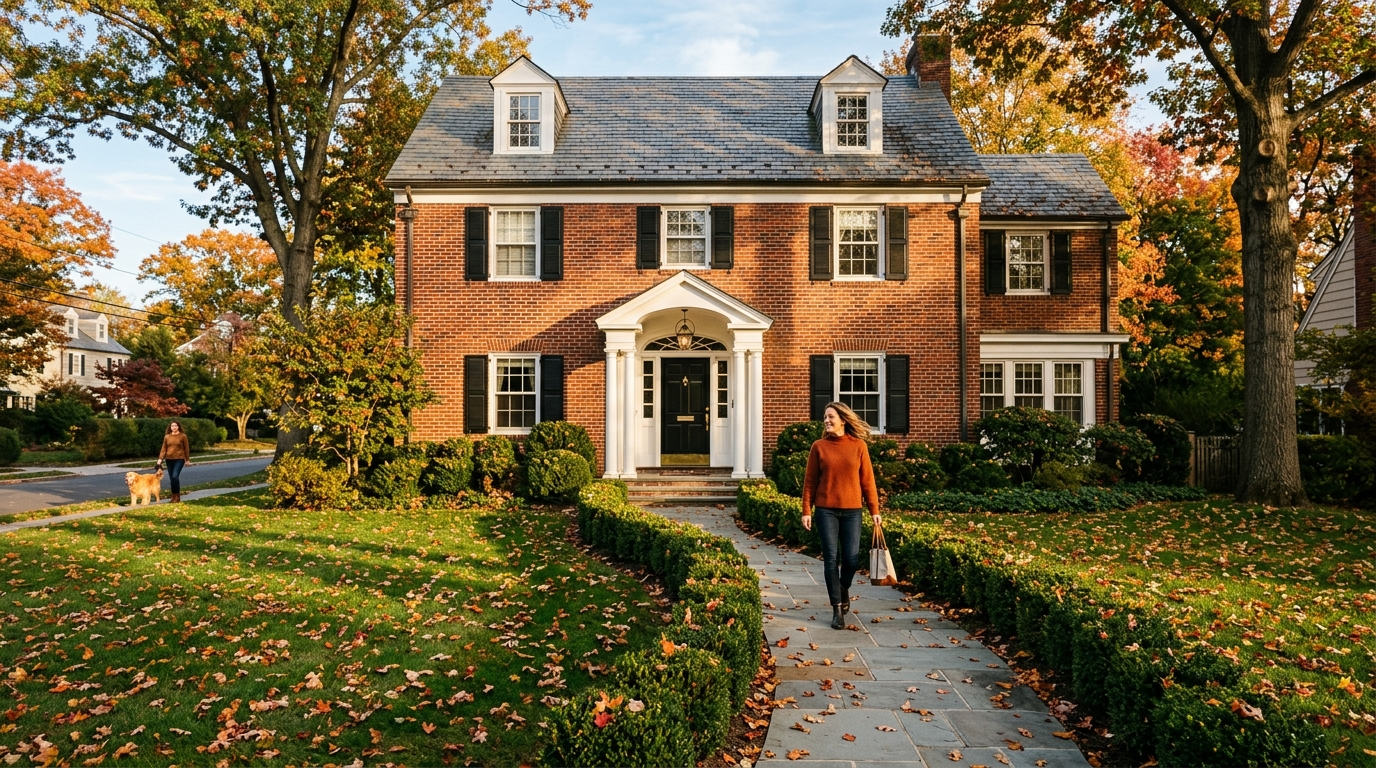
Connecticut Home Insurance Costs: What Influences Your Premium
What Connecticut Home Insurance Costs (and Why Yours Is Different)
If you own a home in Connecticut, you have probably noticed your Connecticut home insurance cost creeping up year over year. You are not imagining it. Premiums in our state have climbed faster than inflation for the past several renewal cycles, driven by a mix of national reinsurance pressure, costlier rebuilds, and a string of severe weather events from Norwalk to Norwich.
So what is the average home insurance cost in CT, and what is actually driving your number? Industry data puts the typical Connecticut homeowner somewhere between $1,300 and $2,500 per year for an HO-3 policy on a single-family home. Coastal properties in places like Old Saybrook, Madison, or Branford often run well above that range, and high-value or older homes can land north of $4,000. The honest answer is that your home is its own risk, and your premium reflects details that no statewide average can capture.
Below we walk through the realistic ranges, the seven biggest factors that shape your CT homeowners insurance cost, why coastal pricing is its own animal, and the discounts most homeowners leave on the table.
Realistic Premium Ranges Across Connecticut
There is no single "average home insurance CT" number that fits every house. Pricing varies dramatically by town, by carrier, and by the home itself. Still, it helps to anchor your expectations before you shop.
- Inland suburban CT (Hamden, Wallingford, Trumbull, Cheshire) — $1,300 to $2,000 a year is common for a 2,000 to 2,500 square foot home with $400K to $600K in dwelling coverage and standard deductibles.
- Older urban housing stock (New Haven, Bridgeport, Hartford) — $1,800 to $3,000 a year, mostly because rebuild costs on century-old homes with plaster walls, slate roofs, and irreplaceable trim are higher than the market value would suggest.
- Shoreline and coastal CT (Madison, Guilford, Branford, Old Saybrook, Stonington) — $2,500 to $5,000+ a year, often with separate wind/hail or named-storm deductibles. Some homes within a mile of the water need surplus lines coverage instead of admitted carriers.
- Rural northwest and northeast CT — $1,200 to $1,800 a year for many homes, but fire protection class can swing this higher if you are far from a hydrant or staffed fire department.
These are ballparks, not quotes. The same house can get a $1,400 quote from one carrier and a $2,600 quote from another, which is exactly why working with an independent agency that compares 20+ carriers matters more than chasing a single TV ad.
The Seven Factors That Drive Your CT Homeowners Insurance Cost
When an underwriter prices your home insurance in Connecticut, they are not pulling a number out of thin air. They are running your home through a model that weighs these seven factors heavily.
1. Replacement Cost (Not Market Value)
This is the single biggest driver, and it is the one most homeowners get wrong. Your dwelling coverage should reflect what it would cost to rebuild your home from the foundation up at today's labor and material prices, not what you could sell it for. In Connecticut, where building codes are strict and a lot of housing stock is 70+ years old, replacement cost often runs $250 to $400 per square foot. A 2,200 square foot colonial might carry a market value of $550K but a true rebuild cost of $750K or more.
2. Location (Coastal, Floodplain, Brush Exposure)
Where your home sits matters enormously. Proximity to Long Island Sound, location inside a FEMA flood zone, and even distance from a brush line all influence your rate. Standard CT homeowners policies do not cover flood — that is a separate flood insurance policy through the NFIP or a private carrier. If you assumed your homeowners policy would handle a basement flood from a Nor'easter, you are not alone, and you are not covered.
3. Age of the Home
Older Connecticut homes are charming and they are also more expensive to insure. Knob-and-tube wiring, cast-iron drain pipes, federal-pearl boilers, and 60-amp electrical panels all raise risk and price. Many carriers will not even write a home with active knob-and-tube or a roof over 20 years old without an inspection.
4. Roof Age and Material
Your roof is the single component that takes the most weather abuse in Connecticut, between Nor'easters, ice dams, and the occasional hurricane remnant. A roof under 10 years old typically earns the best rates. A 15+ year old roof often triggers a higher deductible, an actual cash value (rather than replacement cost) settlement, or an outright non-renewal. Slate and standing-seam metal roofs cost more to insure on the rebuild side but generally last decades longer.
5. Fire Protection Class
Carriers use a 1-10 ISO Public Protection Classification (PPC) score that combines distance to the nearest fire hydrant, distance to a staffed fire station, and the quality of the local water supply. Homes inside well-protected towns like Orange, West Haven, or Milford typically fall in classes 1-4 and earn lower rates. Rural homes more than five road miles from a fire station can land in class 9 or 10 and pay 30 to 50% more.
6. Claims History (Yours and the Property's)
Carriers run two reports on every quote. The first is your personal CLUE report, which shows any homeowners or auto claims you have filed in the past five to seven years. The second is the property's claim history. A prior water claim from a previous owner can bump your rate even if you have never filed a claim yourself. This is one reason we tell clients to think hard before filing a small claim — a $3,000 water claim can add $400 a year to your premium for the next five renewals.
7. Credit-Based Insurance Score
Connecticut allows insurers to use a credit-based insurance score as a rating factor, and the swing is significant. The same house with the same coverage can be priced 20 to 40% differently based on credit alone. The good news is that this score is not the same as your FICO — it weighs different factors, and most homeowners can improve it within 6 to 12 months of attention.
Why Coastal CT Is Its Own Pricing World
If your home is anywhere from Greenwich to Stonington along the shoreline, you live in a different insurance market than the rest of the state. Coastal homeowners insurance in Connecticut comes with quirks that catch new owners off guard.
- Wind/hail or named-storm deductibles — Most coastal CT policies carry a separate deductible for wind damage, often 1% to 5% of the dwelling coverage. On a $700K home that is a $7,000 to $35,000 out-of-pocket hit before the policy pays a dime for hurricane damage.
- Distance-to-water restrictions — Many admitted carriers will not write homes within 1,500 feet (sometimes a full mile) of salt water. When admitted markets decline, you end up in the surplus lines market with carriers like Lloyd's syndicates or specialty writers.
- Flood is always separate — As we covered above, your homeowners policy excludes flood. Coastal homes almost always need a flood policy on top of the standard policy, and FEMA's NFIP rates are now tied to Risk Rating 2.0, which means properties closer to the water pay more.
- Older shingle roofs are deal-breakers — A 20-year-old roof on an inland ranch might still get coverage. The same roof on a Madison home one block from the beach often will not.
If you own a coastal home, take the time to read our full Connecticut homeowners coverage guide before your next renewal. The structure of the policy matters even more than the premium.
Discounts Most Connecticut Homeowners Miss
Before you accept a renewal, run through this list. We routinely find $200 to $600 a year in stacked discounts that a homeowner's previous agent simply did not apply.
- Central station alarm — A monitored burglar and fire alarm can save 5 to 15%. Self-monitored Ring or SimpliSafe systems usually do not qualify; the system has to dispatch through a UL-listed central station.
- Smart water shutoff — Devices like Moen Flo, Phyn, or LeakSmart that automatically shut off your main water line on detected leaks earn 5 to 10% off with a growing list of carriers. Water damage is the #1 home insurance claim in CT, so carriers reward this aggressively.
- New roof — A roof under 5 years old often earns 10 to 25% off. Make sure your agent updates the roof year after any replacement; this is one of the most commonly missed adjustments.
- Bundling auto and home — Multi-policy discounts run 10 to 25% on both policies. If you are still using two different carriers for personal auto and home, you are likely overpaying.
- Claims-free discount — Many carriers reward 3, 5, and 10-year claims-free streaks. This compounds with the rule above about not filing small claims.
- Higher deductible — Moving from a $1,000 to a $2,500 all-other-perils deductible typically saves 8 to 15%. If you have an emergency fund, this is one of the easiest savings levers.
- Protective devices — Hardwired smoke detectors, sprinklers, gas leak detectors, and lightning protection systems all earn small but stackable discounts.
Beyond discounts, the single biggest savings lever is making sure you are not unknowingly setting yourself up for a costly mistake. Our breakdown of the most common home insurance mistakes Connecticut owners make covers the traps we see most often, from underinsuring the dwelling to ignoring ordinance and law coverage.
How an Independent Agency Saves CT Homeowners Money
Here is a piece of insider context most homeowners never hear: the same home, with the same coverage, can be priced wildly differently across carriers. We have seen $1,800 vs. $3,200 spreads on identical risks, simply because every carrier has its own appetite. One company loves coastal homes; the next one runs from them. One rewards new roofs heavily; the next barely cares. One accepts a credit-based score the next one penalizes.
A captive agent can only show you their one carrier's rate. An independent agency does the legwork across 20+ insurance companies at every renewal, finds the carrier whose appetite fits your home, and re-shops when the market shifts. That is the entire reason independent agencies exist, and it is the single most reliable way to control your home insurance in Connecticut long-term.
It also helps to have someone who knows the difference between a Madison shoreline home and an inland Hamden colonial, and who picks up the phone when a Nor'easter takes out half a roof at 9pm on a Sunday.
Get a Real Quote on Your Connecticut Home Insurance
If you are paying more than you should — or worse, if you are paying a fair price for the wrong coverage — the only way to know is a side-by-side comparison. United Insurance Group has been Connecticut's independent agency since 1973, and we shop your home through 20+ top-rated carriers to find the best combination of price and protection for your specific home.
Call us at (203) 795-0275 or request a free comparison at our quote page. We will review your current policy line by line, point out where you are over- or under-insured, and show you exactly what you are paying versus what the rest of the market would charge for the same home. No pressure, no sales script — just a clear answer on what your Connecticut home insurance should actually cost.
Get A Quote
At United Insurance Group, securing your future is easy. Ready to protect what matters? Contact us for a quick quote and personalized insurance options!
Meet, James
Your 24/7 Insurance Assistant • English & Spanish
Start your custom insurance quote
Instant answers to your insurance questions
Schedule appointments or follow-ups
Personal Insurance
From auto and homeowners to renters and umbrella policies, we help protect your family and property. Let’s find coverage that fits your life.
Commercial Insurance
We customize policies for your industry's risks, like general liability and workers' comp, ensuring you can run your business worry-free.
Contact United Insurance Group
Recent Posts