Plumber Insurance in CT: What Every Licensed Plumber Needs Guide
Plumber insurance in Connecticut: what the state actually requires
Plumber insurance in Connecticut is not optional paperwork you deal with once and forget. It is a legal requirement tied directly to your license, and the state's Department of Consumer Protection enforces it. Whether you run a one-person operation out of Derby or manage a crew doing commercial work across New Haven County, the coverage you carry determines whether a bad day on a job site turns into a recoverable setback or a business-ending lawsuit.
Connecticut requires licensed plumbers to carry proof of liability insurance before the state will issue or renew a license. Beyond that legal floor, the practical risks of plumbing work (water damage, pipe failures, injuries to third parties, damage to customers' property) make a bare-minimum policy a risky bet for any serious contractor.
Core coverages every Connecticut plumber should carry
There is no single "plumber's policy." Your protection is built from several layers, each covering a different category of risk. Here is what that typically looks like for a plumbing contractor working in CT.
General liability insurance
General liability is the foundation. It covers bodily injury and property damage claims that arise from your work or your presence on a job site. If you accidentally break a water main and flood a finished basement in Hamden, or a customer trips over your equipment in their kitchen, general liability responds to the claim.
Connecticut's licensing rules require plumbers to carry general liability, and most GCs and municipalities will demand a certificate before they let you on site. Typical limits run $1,000,000 per occurrence / $2,000,000 aggregate for a small-to-mid-size plumbing shop, though commercial contracts often require higher limits. You can learn more about how this coverage works for contractors on our general liability insurance page.
Workers' compensation
If you have even one employee in Connecticut, workers' compensation is mandatory under Connecticut General Statutes Section 31-275. There are no exceptions for part-time help, family members on the payroll, or subcontractors who cannot show their own coverage. The Workers' Compensation Commission actively enforces this, and operating without it exposes you to stop-work orders, fines, and personal liability for any injured worker's medical bills and lost wages.
Even solo plumbers sometimes carry voluntary workers' comp to protect themselves if they are injured on the job. A week in the hospital after a fall from a ladder in Milford can wipe out months of revenue. For a closer look at how this coverage works for small Connecticut businesses, see our post on workers' comp for Connecticut small businesses.
Commercial auto
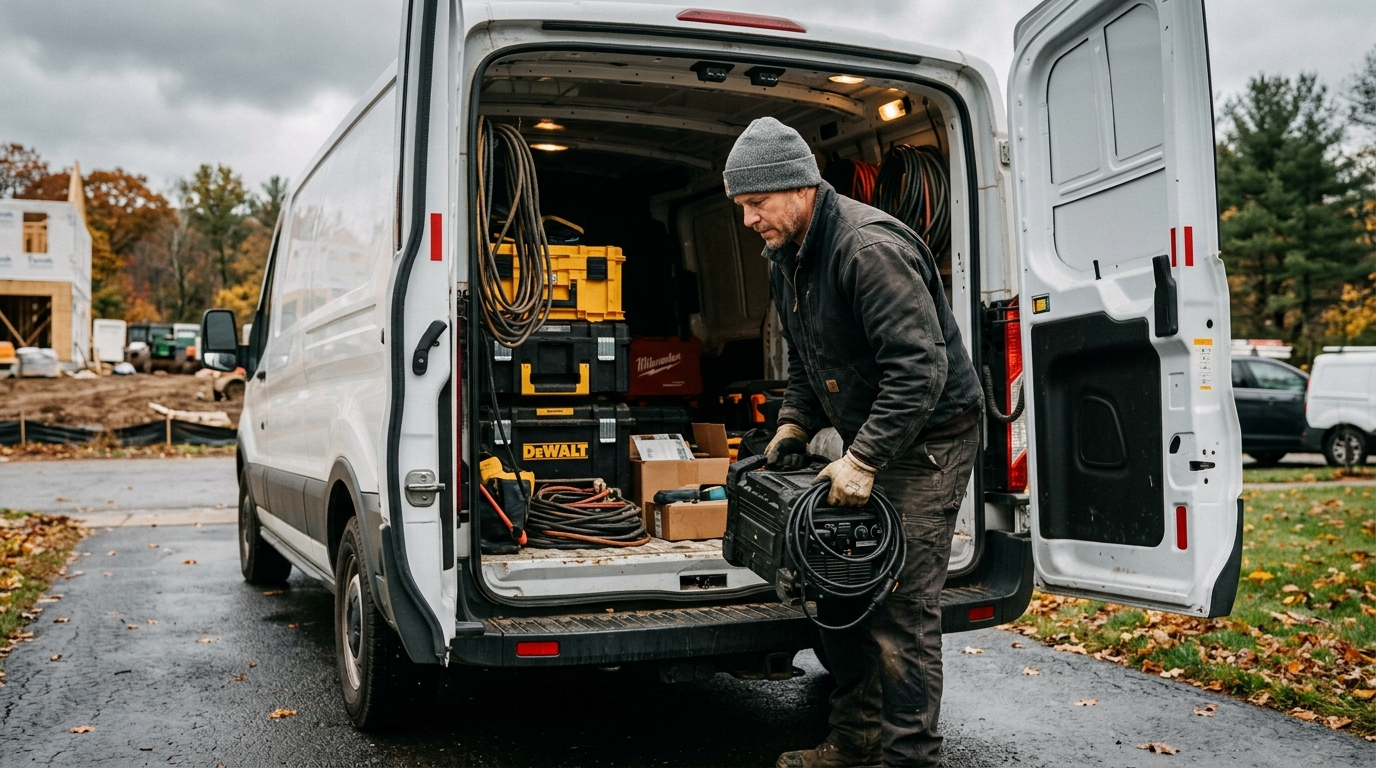
Your personal auto policy almost certainly excludes business use. The moment your truck is hauling tools, pipe, or a helper to a job site, you are using it commercially. Commercial auto insurance covers liability from accidents, physical damage to your work vehicle, and, if you have employees driving, non-owned and hired auto exposure. A plumber driving a van loaded with copper fittings who causes an accident in Stratford faces a claim that could easily exceed personal policy limits.
Inland marine (tools and equipment coverage)
Your tools are your livelihood. A commercial property policy covers equipment stored at a fixed location, but the moment your pipe threader, inspection camera, or power tools leave for a job site, they are exposed. Inland marine insurance covers tools and equipment in transit and at job sites, including theft from a locked vehicle. Tool theft from contractor vans is a real and recurring problem across Connecticut, particularly in urban areas.
Our inland marine insurance guide for Connecticut breaks down what this coverage includes and where gaps typically appear.
Umbrella or excess liability
Large water losses, structural damage from a botched gas line, or a serious injury claim can push past the limits on a standard general liability policy faster than most contractors expect. A commercial umbrella policy sits above your underlying limits and picks up where they leave off. For plumbers doing commercial or multi-family work, umbrella coverage is often required by contract and is almost always worth the premium.
What Connecticut plumber licensing requires from an insurance standpoint
Connecticut licenses plumbers through the Department of Consumer Protection under the Trades Division. To obtain or renew a P-1 (Master Plumber) or P-2 (Journeyman Plumber) license, you must submit proof of liability insurance meeting the state's minimums. The state can revoke or suspend a license if coverage lapses.
A few practical points Connecticut plumbers often run into:
- Certificate of insurance (COI): General contractors, property managers, and municipalities will request a COI naming them as an additional insured. Make sure your policy allows for additional insured endorsements, and keep your agent's contact information handy so you can get updated certificates quickly.
- Subcontractor coverage: If you hire subs, get their COIs before they touch a job. If a sub you hired causes damage and has no insurance, your policy may end up covering the loss.
- Claims-made vs. occurrence: Most GL policies for plumbers are written on an occurrence basis, meaning coverage applies to incidents that happen during the policy period regardless of when the claim is filed. Understand which form you have before you let a policy lapse.
How much does plumber insurance cost in Connecticut?
Cost depends on several factors: your annual revenue, number of employees, claims history, the type of work you do (residential remodel vs. new commercial construction), and the coverage limits you select. Here are realistic ranges for small-to-mid-size Connecticut plumbing contractors.
- General liability: Solo plumbers often see premiums in the range of $800 to $2,500 per year for $1M/$2M limits. Larger operations with employees and commercial work can run $5,000 or more annually.
- Workers' compensation: Connecticut's workers' comp rates are set by the NCCI and vary by job classification. Plumbing and pipefitting work (class code 5183) carries a higher rate per $100 of payroll than office work, reflecting the physical risk involved.
- Commercial auto: One commercial van with solid limits typically runs $1,500 to $3,000 per year , depending on driving history and the vehicle's value.
- Tools and equipment (inland marine): Coverage for $25,000 to $50,000 worth of tools often falls in the $300 to $700 per year range, depending on deductibles and the specific equipment list.
Bundling multiple coverages through the same carrier, or working with an independent agent who can shop multiple markets, often produces meaningful savings compared to buying policies one at a time.
Common coverage gaps plumbers in Connecticut miss
Even plumbers who think they are fully covered sometimes discover holes after a claim. These are the gaps that come up most often.
- Completed operations coverage: This portion of your GL policy covers damage or injury that occurs after you finish a job and leave the site. A pipe joint you soldered in Guilford that fails six months later and floods a kitchen falls under completed operations. Some budget policies undercut this limit or exclude it entirely.
- Faulty workmanship exclusions: Most GL policies exclude damage to the specific work you performed (the actual pipe you installed) but cover consequential damage to surrounding property. Know where that line sits in your policy before a claim happens.
- Pollution coverage: Sewage backups, certain gases, and chemical drain treatments can trigger pollution exclusions on standard policies. Plumbers who deal with sewer lines or commercial properties should ask about contractors' pollution liability.
- No workers' comp for the owner: Connecticut allows sole proprietors and partners to exclude themselves from workers' comp, but that means a serious on-the-job injury comes out of your own pocket. Think carefully before waiving this.
Comparing carriers matters more than most plumbers realize
Not every insurance company prices plumbing contractor risk the same way. One carrier might rate you heavily on your annual revenue; another weights claims history more. Some carriers specialize in contractor trades and offer coverage options (like contractors' pollution liability or blanket additional insured endorsements) that standard business insurers do not. Shopping the market is not just about finding the lowest premium. It is about finding a policy that actually fits how you work.
Connecticut plumbing contractors from New Haven to Shelton to Trumbull have different exposures depending on the type of work they do, the size of their crews, and the contracts they take on. A policy built for a solo residential service plumber is not the right fit for a contractor doing new commercial construction in Middletown.
Our plumber industry insurance page outlines the specific coverages we put together for plumbing contractors and what to expect from the quoting process.
Get plumber insurance quotes from United Insurance Group
United Insurance Group is an independent insurance agency serving plumbing contractors across Connecticut. Because we are independent, we are not tied to a single carrier. We compare rates and coverage options from multiple insurance companies to find the combination that fits your operation, your budget, and the contracts you need to win.
If your current policy is coming up for renewal, or if you are not sure your coverage is keeping pace with how your business has grown, now is a good time to take a look. Call us at (203) 795-0275 or request a quote online and we will put together a comparison built around your specific work.
Get A Quote
At United Insurance Group, securing your future is easy. Ready to protect what matters? Contact us for a quick quote and personalized insurance options!
Meet, James
Your 24/7 Insurance Assistant • English & Spanish
Start your custom insurance quote
Instant answers to your insurance questions
Schedule appointments or follow-ups
Personal Insurance
From auto and homeowners to renters and umbrella policies, we help protect your family and property. Let’s find coverage that fits your life.
Commercial Insurance
We customize policies for your industry's risks, like general liability and workers' comp, ensuring you can run your business worry-free.
Contact United Insurance Group
Recent Posts